phattv.dev
Videos
Videos worth rewatching, with quotes and timestamped deeplinks.
Index
Startups & strategy
- How to Start a Startup — Y Combinator — Lecture series; notes live in their own post
- Why timing beats the idea — Bill Gross — Timing explains 42% of startup success
- Six-part framework for great companies — Jeetu Patel — Timing, market, team, product, brand, distribution
Leadership & management
- Engineering management & hiring — Dave Renson — Work yourself out of a job; what to ask EM candidates
- New playbook — Brian Chesky — Potential, culture and “fake work”
Product & growth
- Why “everyone a builder” fails — Sherif Mansour — PM as shared brain; direction over throughput
- The nature of product — Marty Cagan — Empowered teams and two kinds of discovery
- Product-led sales — Elena Verna — PLG vs PLS, monetization awareness, pitfalls
Design
- Building beautiful products — Katie Dill — Design is intention
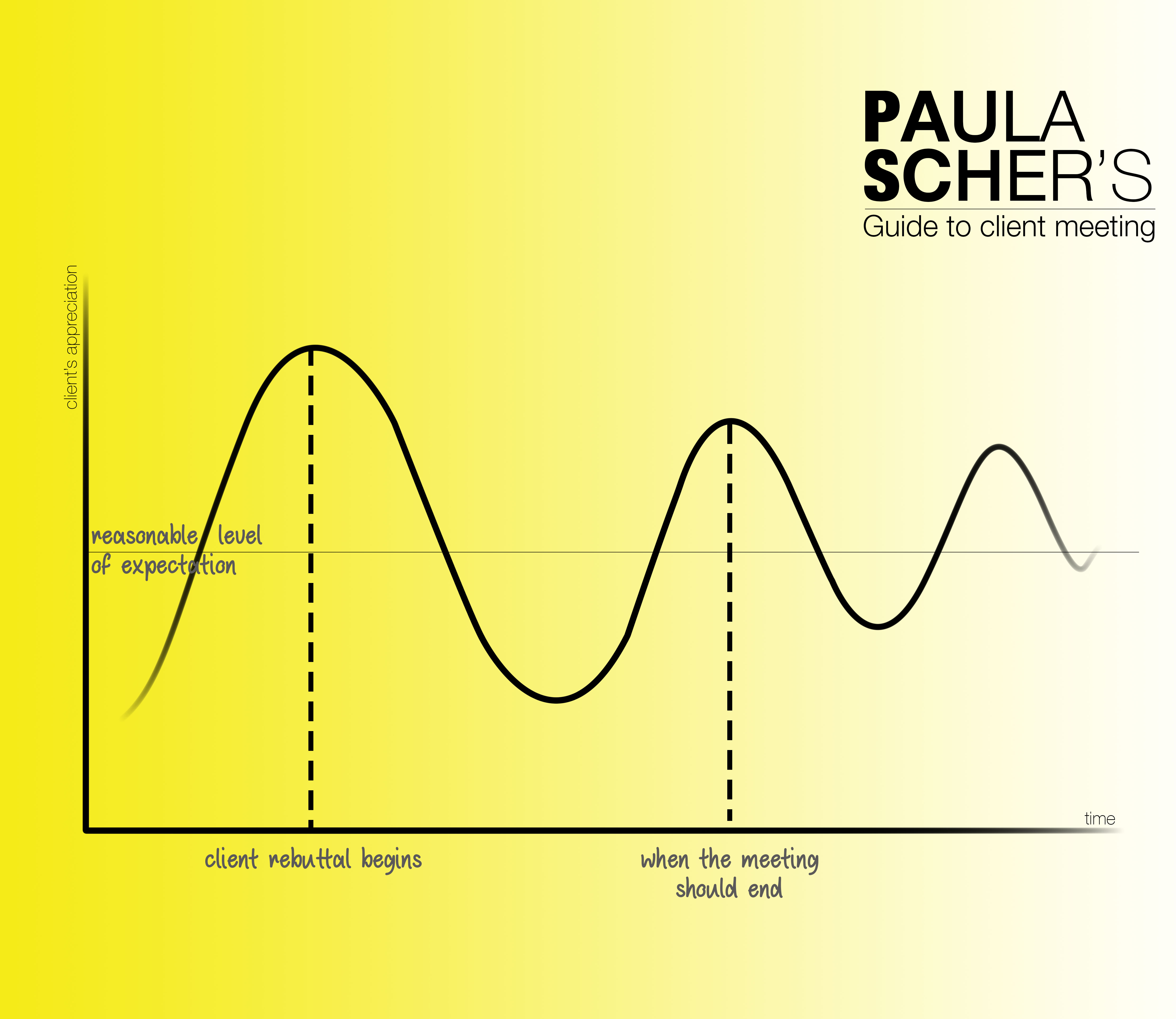
- Client meeting diagram — Paula Scher — Presentation vs. reasonable expectations
AI & engineering
- How Anthropic builds software — Katelyn Lesse — Verifiable AI-written code, shifting engineer identity
- The infinite software crisis — Jake Nations — Will we still understand our systems?
How to Start a Startup - Y Combinator: The Vault
Startups · ↑ index
The single biggest reason why start-ups succeed | Bill Gross
Startups · ↑ index
I used to think that the idea was everything. I named my company Idealab for how much I worship the “aha!” moment when you first come up with the idea - 1:32
“Everybody has a plan, until they get punched in the face.” […] So much about a team’s execution is its ability to adapt to getting punched in the face by the customer. The customer is the true reality - 1:52
The number one thing was timing. Timing accounted for 42 percent of the difference between success and failure. Team and execution came in second, and the idea […] that actually came in third - 3:37
Business model makes sense to be that low because you can start out without a business model and add one later if your customers are demanding what you’re creating - 4:05
Broadband penetration was too low in 1999-2000 […] Just two years later, when the codec problem was solved by Adobe Flash and when broadband penetration crossed 50 percent in America, YouTube was perfectly timed. Great idea, but unbelievable timing - 5:29
Execution definitely matters a lot. The idea matters a lot. But timing might matter even more. And the best way to really assess timing is to really look at whether consumers are really ready for what you have to offer them - 6:00
Be really, really honest about it, not be in denial about any results that you see, because if you have something you love, you want to push it forward, but you have to be very, very honest about that factor on timing - 6:12
Engineering Management: Interviews & Hiring ft. Google Engineering Director
Leadership · ↑ index
A great one, the ones I want to hire and the ones I want to grow and the ones I want to invest in, are actually the ones who are spending a lot of time thinking about how to work themselves out of a job - 1:18
I want to hear the engineers say that they get a great deal of personal satisfaction from growing other people. They want to build people - 3:05
I’m going to ask every candidate: tell me the person you’re most proud to have ever managed and how you grew them […] if they think more than five seconds about it that’s kind of a red flag for me - 3:45
The sin is not in the failure, the sin is in failing to notice. So I want to know that you’re good at noticing and correcting - 6:32
All successful people have some combination of three traits. They’re conscientious, they’re intelligent, and they’re naive, meaning they have enough naivete left that they’re willing to walk into a hard thing without really realizing how hard it is. Otherwise most of us would never try something hard - 8:56
Meetings are a bug, not a feature. The only legitimate purpose for a group meeting is to make a decision or resolve a dispute. Do everything else in a doc - 11:51
Every question you get asked can be answered with exactly one of three things: I know the answer, I don’t know, or I know the answer but I’m not going to answer it […] but never hand wave your employees - 15:10
If you discover you’re wrong you should really try to be the first one to raise your hand and admit it. You should try to do it in the context where you made the mistake - 15:45
You should talk about it as an experiment […] let’s structure this as a six month experiment, and then in six months we’ll sit down and have a very frank conversation and ask how did the experiment go - 17:42
Brian Chesky’s new playbook
Leadership · ↑ index
The role of a leader is to see potential in people that they may not even see themselves and when I tell somebody it’s not good enough, either I’m saying you’re not good enough, or I believe that you have more potential than you’re showing me
Culture is what happens when you’re not in the room and the brand is what people say when you’re not in the room
I now try to say no to what I call fake work, which is things that feel like work but they don’t actually move the ball down the field, and I really try to say yes to work that’s very meaningful and people that are very meaningful to me
I hope years from now, 70% of what I said I still believe but if 100% of what I say, I still believe then I probably haven’t learned very much
How Anthropic builds software in 2026 with Katelyn Lesse (The Pragmatic Engineer)
AI & engineering · ↑ index
The people who are having a harder time are the people who are like my identity used to be that I click clacked on my keyboard and I wrote code and stuff got done - 1:34:19
Yes, fine. It’s the case that you no longer write individual lines of code, but what we want to have happen with AI is to get to a point where like diseases are getting cured, right? […] But we can go and solve those problems - 1:34:37
You can’t just let a huge team of agents go wild trying to solve these problems if you haven’t solved some of these underlying engineering problems correctly first - 1:36:47
We still need humans who have deep expertise in security and deep expertise in auth and infra and all these different pieces in order to create the right underlying systems so that those teams of agents can go and solve those big problems - 1:37:11
In any place at any scale, if you raise the ambition level, there’s still work that engineers are going to have to do in order to enable that elevated ambition - 1:41:04
I think so much of it is coordination. It’s getting teams and people on the same page. It’s making agents get on the same page and get stuff done. I think it’s really zooming out and understanding the mechanics of how you go from idea to reality on something - 1:45:04
Maybe don’t go become a security expert in order to solve one problem that’s directly in front of you […] But you can extrapolate and see how some of the problems we’re starting to experience are going to get more complex over time - 1:46:43
You’re going to want to be someone who can wrap your head around these things and see ahead and see around those corners and get in front of those things before they become more problematic - 1:47:05
Why “everyone becoming a builder” isn’t working - Sherif Mansour, Atlassian (Lenny’s Podcast)
Product · ↑ index
What makes a good Product Manager?
Product managers don’t own all the decisions. But it’s about if they can build a shared brain with their team, their cross-functional team, especially their engineers. I always say three types of context to my teams. You have the customer context, you have the product and market context, and you have the business that you operate in context. And you’re always filling context gaps - 2:46
Having a job of building a shared brain as a group on those three contexts becomes key because if you can empower everyone with that context they can move faster - 3:21
I think the best PMs are the ones that are thinking about building a shared brain at any scale product or software team - 4:06
We realize throughput’s not our problem. Directions are problem. But throughput’s getting cheaper - 25:04
AI is really good at amplifying your strengths and equally it amplifies your weaknesses - 27:48
Most organizations that have access to developers, this is not their problem. Their problem is where to direct the ship - 57:20
The context in which the advice is given is super important - 57:27
The number one thing I’ve seen is they go too hands off too quickly […] the teams love it when they see managers lead by example - 1:03:03
They’ve thought about that thing far more than anyone else. And the aha moments that got them there, my job now is to fill that context gap to work out why did they get there and do I feel convicted of their thing? - 1:05:42
Assume they’re right and assume you’re wrong. And try to fill that context gap and sometimes you’ll prove them wrong but it’s not the goal here. The goal is to get the best outcome for customers - 1:07:01
The best PMs I find can argue against themselves and present you really good reasons why they shouldn’t do the thing - 1:08:45
You’re a product of someone else creating opportunities for you. So ask yourself who are you creating opportunities for? - 1:11:06
Don’t be the person that amplifies that one view without first understanding the context - 1:20:53
The nature of product | Marty Cagan, Silicon Valley Product Group
Product · ↑ index
On an empowered product team where you’re trying to come up with a solution that solves the problem you’ve been assigned, that means we have to discover a solution that’s 1. valuable 2. usable 3. feasible 4. viable. Now while the engineers definitely own feasible, and the designer definitely owns usable, valuable & viable which are two of the hardest things to do that’s the product manager. That takes skill & knowledge. That’s why we say in order to be a product manager on a real product team you’ve got to do your homework
There’s 2 kinds of discovery: 1. discovering the problem to solve that you should focus on, and 2. discovering the solution that you’re going to deliver that people would buy. People don’t buy the problem they buy your solution. Obviously they don’t buy it if it’s not solving something they care about but, there are many products that are solving what they care about. The real question is do you solve it better than everybody else so that they buy you and that’s where you need to take time. If you need to spend a little time on the problem fine but don’t spend a lot of time, because you need to save as much time as possible to come up with the winning solution
Most of our time needs to be on solution and that’s prototyping, that’s testing with users, testing with customers, testing with stakeholders, testing with our developers, we’re testing constantly. We’re not just trying to find out you know if they like it. In fact, it’s just the opposite. It’s weird when we’re doing user research, we’re finding all the reasons they don’t like it. In fact, that’s an Elon Musk quote is when you do user research you should be focused on finding all the reasons they won’t use your product
Building beautiful products with Stripe’s Head of Design | Katie Dill (Stripe, Airbnb, Lyft)
Design · ↑ index
At the core design is is simply intention. You’re bringing intentionality to the decisions that you make, and thinking about who is this thing for. If you’re designing a door knob, does the door knob speak to whether or not I’m going to push or pull or turn, is it comfortable in the hand, is it easy to manufacture, is it easy to put on and remove. These are some of the intentional decisions one could make whether or author, a designer, an engineer, the product person, any function can put that intentionality, who is impacted by this, who is using this. That literally could be anything from designing a door knob to designing your org structure, to designing your strategy. Obviously great design is also creative and it also is demonstrated with great taste, design expertise with people that have these creative skills and and these great taste is an incredible important thing to bring into the organization. But I think day one everybody can bring more care and intentionality and I think that will result in better outcomes internally and externally in the long run.
The ultimate guide to product-led sales | Elena Verna
Growth · ↑ index
Product-led growth is all about product’s ability to self-serve activate, self-serve engage, and convert that usage to a monetization opportunity. So you bring people, you get them to an aha moment into the habit loops, and then you able to extract value back out of them.
Extraction of the value can be direct where you actually capturing revenue from them, or it can be indirect where they’re participating in your growth model via virality or user generated content and bring additional business through the doors. There is self-serve monetization. So I’m using product self-serve, I go to the pricing page, I find the plan that best suits me on features that I want to unlock, or usage that I want to unlock, and I buy it. However that’s not the only way to monetize that usage. You can monetize that usage with sales, too. Why? Self-serve monetization has a cap of about 10 thousand dollars that’s just how much we’re able to process on the credit cards before they start getting flagged and declined by the banks. So much we as a consumers and prosumers are even willing to put on our credit card, because not all credit cards have limits of over 10 20 30 40 thousand. So self-serve monetization is very much a prosumer use case where an individual is trying to solve the problem on their own.
Product-led sales converts the usage that you’ve generated via self-serve into a sales opportunity, and it attaches a salesperson to close a much larger contract, which can be 15 20 a 100 thousand dollars, in order to bring an enterprise level solution to a company that has already been using it in the self-serve manner. Product-led sales assumes that there is a migration from an individual use case that you acquired an end user, with and an escalation into an enterprise level solution that solves enterprise level problems.
Self-serve monetization is very much an individual use case, versus product-led sales is turning that individual use case and self-serve usage into a sales pipeline with enterprise level value.
In traditional sales world, marketing creates pipeline for sales, sales sells product, product engages with the paid user to drive retention. In the product-led sales, product acquires and activates a customer, and product creates pipeline for sales. So relationship is not that there is a go to market org with marketing and sales, and product just kind of throws features across the fence for them to sell. The collaboration here is between product and sales. What that means is the product has to take on accountability over pipeline. The worst thing that you can do is to say: “I’m going to do product-led growth or I’m going to do product-led sales, and I’m gonna do it in marketing”. Recipe for disaster. You will be failure mode within 6 months, because product has to take accountability over selling of the product itself. And that is not to be taken lightly, because so many product teams are deeply deeply uncomfortable with owning monetization targets.
Every product should have goals on keeping healthy engaged user base. They should definitely have goals in terms of, maybe feature utilization, or customer satisfaction. But what I’m saying is to have also some sort of monetization goals. What that is for each company I think differs, depending on their level of comfort and their love and how close they are to revenue capture mechanism.
If you have a freemium product, I guarantee you 75% of your customers in freemium product are not aware of what you’re selling. So only focusing on monetization awareness can give you incredible output on driving monetization, and it’s really its products ability to communicate via feature walls, via usage walls, via trials, or what the value of the paid offering is. I’ve seen I’ve heard stories from Slack, of just showing message limits messaging, and how big of an improvement on conversion rate it had. I’ve had it firsthand at Survey Monkey, where just adding consistent UI across all of the paid triggers that were that Amazon gold color, and making sure that each user has been able to see at least 3 of them. There’s a rule of 3 that goes into advertising, that we need to see things 3 times in order to remember them. That drove monetization awareness and conversion rate up, but that’s basically consumes 80% of your work. The second one is just conversion rate optimization, so your pricing page optimization, your checkout page optimization, your currencies that you offer, the payment methods that you offer, to make sure that there is as low friction as possible in order to actually pay. Then the last one is is what you’re selling do people want to buy. This is where you actually go after monetization model change, which features are in each plan, what are the price points in each plan, how does the upgrade path look like, do you have add-on strategy, do you have just pay to paid monetization plan strategy.
Awareness of monetization. Two ways. One qualitatively. I just run surveys against people say “do you know what we’re selling?” It’s shocking how many just have no idea what’s in our paid plans. Or I just track pricing page views per activated account. So how many of the activated accounts landed on the pricing page at least once, because that’s at least a level of exposure that they hit some sort of trigger that pulled them to explore pricing page. One of the things that I just want to give a hint to anybody who’s listening from a sales top-down companies, one issue you might have is that when your product is developing functionality especially, paid functionality, they just design review it and ship it for paid plans only. So if I’m in the free plan or in the lower tier plan, I don’t even see it I don’t even know that existence, because it doesn’t exist in the app because it was never designed for me to even see it. So just doing one small change of pushing your design reviews, to review functionality from every single state of the customer, free state, lower paid state, and target state. that this functionality is actually unlocked, can do all of the difference in the world. Because then you’ll actually understand how that functionality is being exposed to a free user.
Pitfalls:
- Don’t treat product-led sales as a traditional top-down sales process. Every single user does not equal an opportunity for you to co-chase after. You need to understand the right triggers and usage. They can help you automate qualification process, so it’s almost automating some of the SDR efforts to say when is the right time for my sales for my human that I’m paying a lot of money to intervene into this account and add value. Because sales interaction has to add value to user journey, not be disruptive, or create additional friction.
- Hold your product accountable. This cannot be just executed through marketing and sales. Product has to have a seat at the table, and product and sales relationship has to be one of the closest ones in this motion. And that’s really hard to change, especially in the traditional top down sales company where marketing and sales have closer relationship. So try to create new rituals, try to create the new ways of communication between the teams for them to be aligned behind the same goals number.
- Don’t leave marketing out of the equation. Majority of your usage will not have a buyer in it. You will need marketing your enterprise marketing, your account based marketing, to go and find and hunt that buyer, and to bring them and connect them with usage. So lean on your marketing team, just because you’re doing product-led growth and product-led sales does not mean you don’t need marketing. Strong product marketer can do wonders, in helping you with messaging, with outreach and sales enablement materials.
- Don’t wait on data and efficacy too long. You might be using your intuition at the beginning very well, but start thinking about how you will need to scale your data issues. because product-led sales is all about leveraging usage for pipeline creation. So you need to be able to measure that usage, understand that usage, track it and evolve it.
AI is critical for humanity’s survival: Cisco President on the AI revolution | Jeetu Patel
Startups · ↑ index
There’s a framework that I use for how to build great companies, that’s the six-part framework in descending order of importance:
- Timing: it’s the thing that you control the least. There’s a lot of companies that have built amazing products, amazing services at the wrong time, in the right market and no one wanted it. Timing really matters. you don’t control timing, but without timing you don’t win.
- Market: You have to be able to go after a large enough market a chunk at a time. And if you don’t, if you’re not able to go out and prosecute a market a chunk at a time, but make sure that keeps getting bigger and bigger.
- Team: You have to have the right team. Team does not mean just people liking each other. Team means that it is actually well-rounded. Things that you suck at, someone else is really good at, and you’re both accepted that of each other. A well-rounded team where people understand how to complement each other.
- Product: Product is the soul of a company. That’s the place where people seek value. What are you delivering to me? What problem are you solving to me? Get manifested through the delivery of a product. So you have to make sure you build a great product.
- Brand: Once you lose your brand, you lose your trust, people don’t come back to you.
- Distribution: Just because you build it, they will not come. You have to make sure that you figure out a scaled mechanism of getting that offering to many many people.
The Infinite Software Crisis – Jake Nations, Netflix
AI & engineering · ↑ index
The hard part wasn’t ever the mechanics of coding, the syntax, the typing, the boilerplate. It was about understanding the actual problem and designing the solution. - 3:37
Easy means you can add to your system quickly. Simple means you can understand the work that you’ve done. Every time we choose easy, we’re choosing speed now. Complexity later. - 5:15
There’s no resistance to bad architectural decisions. The code just morphs to satisfy your latest request. - 6:33
Technical debt doesn’t register as debt. It’s just more code. - 7:11
5 million tokens became 2,000 words of specification. - 10:42
The human checkpoint here is critical. […] The highest leverage moment in the entire process. Catch errors here. Prevent disasters later. - 12:05
We’re not using AI to think for us. We’re using it to accelerate the mechanical parts while maintaining our ability to understand it. […] The thinking, the synthesis, and the judgment though, that remains with us. - 14:10
We had to earn the understanding before we can code it into our process. I still think there’s no silver bullet. - 15:52
“It works” isn’t enough. There’s a difference between code that passes test and code that survives in production. - 16:21
We’re losing our ability to recognize problems. That instinct that says, “Hey, this is getting complex.” It atrophies when you don’t understand your own system. - 16:56
The hard part was never typing the code. It was knowing what to type in the first place. - 18:03
The question is going to be whether we will still understand our own systems when AI is writing most of our code. - 18:25
Abstract: The Art of Design | Paula Scher: Graphic Design | FULL EPISODE | Netflix
Design · ↑ index
This is a diagram of a meeting. You are giving a presentation. This line is the line of the reasonable level of expectation that everyone has when you walk into the room. You begin to present. And you come above the level of reasonable expectation. Everybody gets enthusiastic, people begin to start asking questions. And about right here you reach the height of the appreciation that you’re gonna get for this presentation. And at this point, somebody’s gonna make a rebuttal to your presentation. You’re gonna sink a little bit below that line of expectation. You grab it back and you make some concessions. And you get up to about here. And at this point, this is as high as you’re ever gonna get. It’s not as high as here, but it’s good. The meeting must end here, because what will happen is a counter-rebuttal to your offer. It will go down below the reasonable level of expectation, and then comeback only nearly above it, and will continue on until you reach a sudden death.